Professional Skin Care
Foot care is an important but often overlooked part of skincare. Issues like calluses and cracked heels cause discomfort, pain, and embarrassment for many clients. As an esthetician, you can offer targeted treatments to address these problems and help clients feel more confident. This guide covers key techniques and treatments for healthy feet, focusing on exfoliation, hydration, and massage.
Understanding Common Foot Skin Concerns
Foot problems are more common than people think and can affect daily life. Common issues include:
Calluses
Calluses are thick, hardened areas of skin that form from repeated friction or pressure, often from poor-fitting shoes or long periods of standing. They can be painful and make walking uncomfortable if not treated.
Dry, Flaky Skin
Feet dry out easily, leading to rough, flaky patches. If left untreated, dryness can turn into cracks that bleed and raise the risk of infection and pain.
Cracked Heels
When dryness becomes severe, deep cracks can form in the heels. These fissures are painful and can become infected, affecting mobility and comfort.
What Services Can You Offer? Essential Foot Care Techniques
As a spa professional, you can treat common foot concerns with focused care:
Exfoliation
Regular exfoliation removes dead skin and smooths rough areas, helping prevent callus buildup. Gentle scrubs or foot files used during treatments can make a noticeable difference.
Moisturizing
Hydration is key to preventing dryness and cracking. After exfoliating, apply rich foot creams with ingredients like urea or lactic acid for deep moisture and long-lasting softness.
Addressing Specific Issues
For calluses and cracked heels, use targeted methods to ease discomfort and avoid further problems. Regularly using a pumice stone and thick, reparative creams can be very effective.
A Guide for Foot Treatments
Whether clients need help with cracked heels, calluses, or simply want a refreshing foot treatment, follow these steps to prepare and provide excellent care.
1. Preparation
Gather all products and tools before you begin. Arrange a comfortable space for the client to relax and soak their feet.
2. Foot Soak
Start with a foot soak. Fill a basin with warm water and add a suitable soak product. Epsom salt works well for most clients, or choose a product aimed at their specific needs. Have the client soak for 10–15 minutes to soften the skin and help products absorb.
3. Exfoliating Foot Scrub
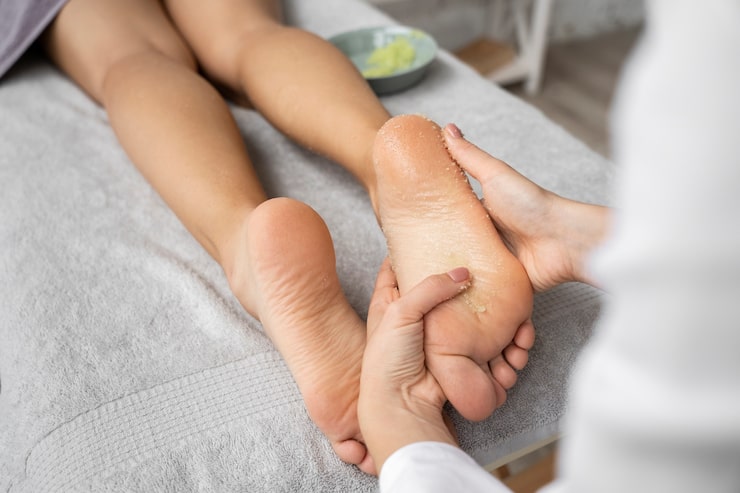
After soaking, gently towel-dry the feet, leaving them slightly damp if needed for the exfoliant. Apply a physical scrub, such as the Coconut Sugar Scrub, and massage in circular motions, focusing on rough spots. This scrub is great for dry skin because coconut oil hydrates while natural sugar cane crystals provide gentle exfoliation. Rinse with warm water and pat dry.
4. Callus Removal
Buff callused areas to smooth the skin using a foot file or callus remover. Work gently and avoid over-buffing to prevent irritation.
5. Paraffin Wax Treatment
Next, try a paraffin wax treatment. Melt the wax in a paraffin bath until it’s liquid, then carefully dip the feet to coat them evenly. Let the wax set slightly, wrap the feet in plastic, cover with a warm towel, and leave for 15–20 minutes. Remove the wax by gently peeling it off.
6. Moisturize the Feet
Finish by applying Apricot Body Oil and massaging it into the feet to hydrate and improve appearance. This oil is rich in vitamins A, B, and C to soften skin, and contains Biocomplex2™, an antioxidant blend that helps strengthen and protect the skin.