Skin Care
Years spent outdoors in the sun take a toll on our skin. Time exposed to the elements often shows up as dark spots, wrinkles, sagging, and uneven color.
For sun lovers, this damage can speed up aging and raise the risk of skin cancer. Read on for the most common signs of sun damage on the face and body, and learn how to improve your skin’s appearance.
Table of Contents
Jump to…
– Signs & Symptoms of Sun Damage
– How to Protect Your Skin from Sun Damage
– Sun Damage on the Face: Signs & Symptoms to Watch For
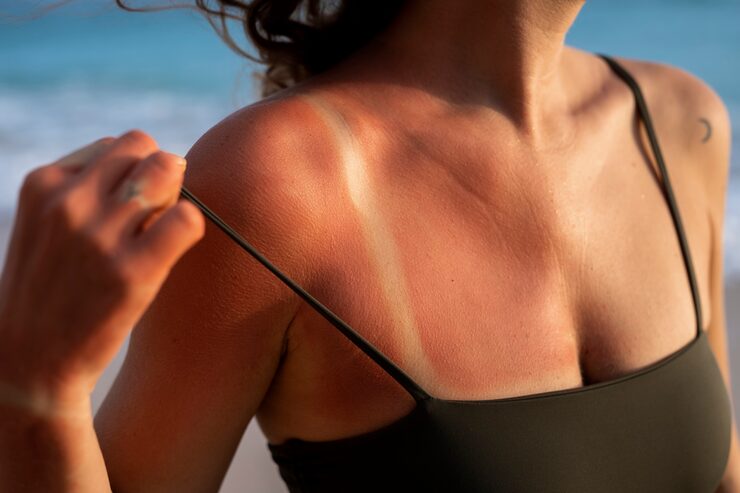
Sun damage differs from normal aging, which is driven by time and genetics. UV light from the sun can permanently change the skin’s structure. Common signs include:
Rough, Dry Skin
Years of UV exposure can change your skin’s texture. You might notice scaly patches, thick or crusty skin, or raised areas. The American Academy of Dermatology warns about actinic keratoses (AKs), rough, scaly patches that are considered precancerous. AKs can sometimes develop into squamous cell carcinoma, a type of skin cancer. Watch for new or changing spots and see a doctor if you’re concerned.
Wrinkles & Fine Lines
UV rays break down collagen, the protein that keeps skin firm and stretchy. Over time this leads to fine lines, wrinkles, and thicker-feeling skin. In fact, roughly 90% of visible skin aging is linked to sun exposure.
Sagging, Loose Skin
Collagen and elastin, the proteins that hold skin in place, weaken with both age and outside factors like sun damage, poor diet, heavy alcohol use, and smoking. When these proteins break down, skin can appear loose and saggy.
Spider Veins
As collagen breaks down, the support around blood vessels weakens, making small veins easier to see. These can look like red, purple, or blue lines across the skin’s surface, resembling a spider’s web.
A Ruddy Complexion
A red, blotchy, or uneven complexion can be inherited, but it can also come from too much sun. Broken capillaries and an overall reddish tone may be signs of sun damage.
Hyperpigmentation
Hyperpigmentation covers uneven skin tone and dark spots. Some patches are raised (papules or plaques) and others are flat (patches or macules). Moles and other spots can change over time, so any change in color, size, shape, or texture should be checked by a doctor.
Dark spots—also called sun spots, liver spots, or lentigines—look like large freckles or flat brown patches. They form after long-term sun exposure and often appear on the face, hands, arms, neck, and chest. This is different from pigment loss conditions where melanin production is reduced.
If you’ve noticed these issues, read on to learn how to protect your skin and improve its health.
How to Protect Your Skin
If you want to keep your skin looking healthy, try these seven steps:
1. Reapply SPF Every Two Hours
Sunscreen only works if you use it. Reapply a broad-spectrum SPF 30 or higher every two hours, or more often if you’re sweating, towel-drying, or in water.
2. Use Sunscreen with SPF 30 or Higher
If you’ve seen early signs of sun damage, the best first move is to stop more damage. A regular sunscreen with SPF 30 or higher helps slow visible aging and other effects of UV exposure. For example, our Daily Defense Tinted SPF is a mineral sunscreen with broad-spectrum SPF 50+. It’s non-comedogenic and silicone-free to help keep pores clear while giving your skin a healthy glow.
3. Look for “Broad Spectrum” on the Label
SPF measures protection from UVB rays, which cause sunburn and contribute to skin cancer. But it doesn’t tell you about UVA protection, which ages skin and causes wrinkles. Choose sunscreens labeled “broad spectrum” to guard against both UVA and UVB rays.
4. Choose an SPF with Moisturizing Ingredients
If sun exposure has left your skin dry, pick sunscreens that also hydrate. For example, our Radiant Protection SPF Fluid offers a nourishing, hydrating feel while shielding skin from the sun.
5. Check Your Skin Often
After bathing or showering, take a moment to look over your body so you know what’s normal for your skin. Keep an eye on existing spots and watch for any changes in size, color, border, or texture. Any change should be checked by your doctor.
6. Use Products with Vitamins and Antioxidants
Pairing sunscreen with antioxidant-rich skincare helps defend against visible aging. Vitamins C and E are especially helpful. For instance, the Citrus & Kale Potent C+E Serum combines antioxidants from citrus, leafy greens, and avocado to protect skin from environmental stress and dryness, and works well with sunscreen.
7. Limit Peak Sun Time and Wear Protective Clothing
Avoid prolonged sun exposure during peak hours (roughly 10 a.m. to 4 p.m. in many places). Cover up with clothing and a hat, use sunscreen, and seek shade when possible.
If you’re noticing signs of sun damage, explore our sun care products for added protection or visit your nearest Eminence Organics Spa Partner for help evaluating your skin.
Product Picks
Daily Defense Tinted SPF
All-mineral tinted sunscreen
$64.00
(11)
Add to Basket
Citrus & Kale Potent C+E Serum
Vitamin C serum for all skin types
$118.00
(131)
Add to Basket